
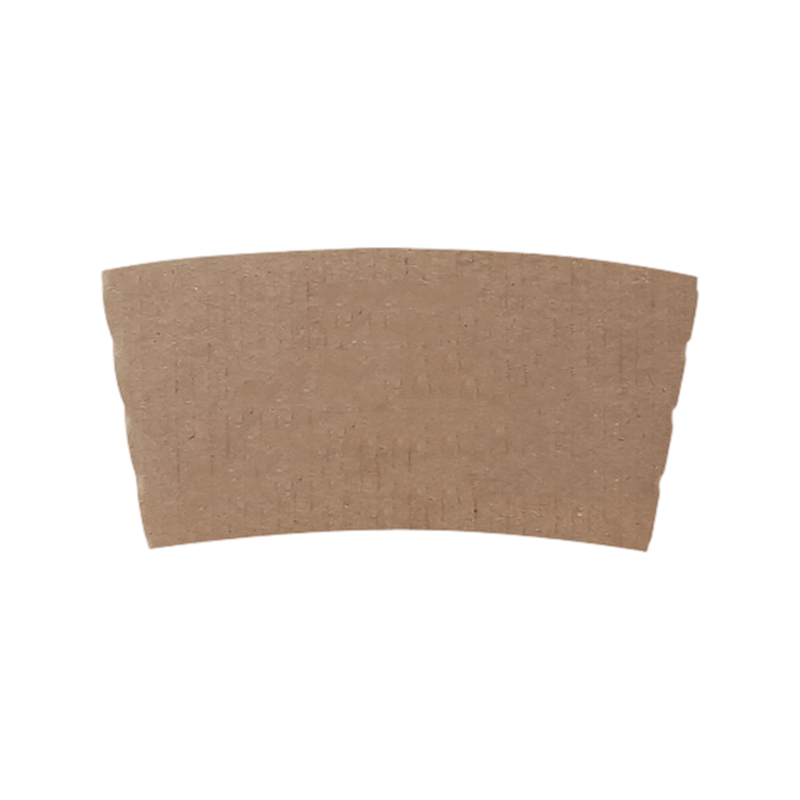
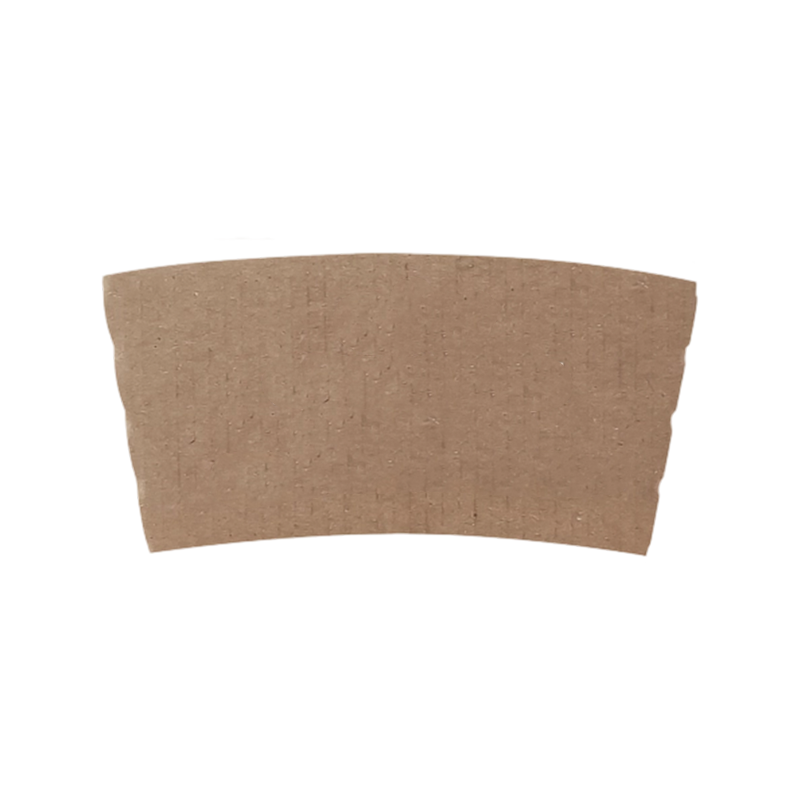
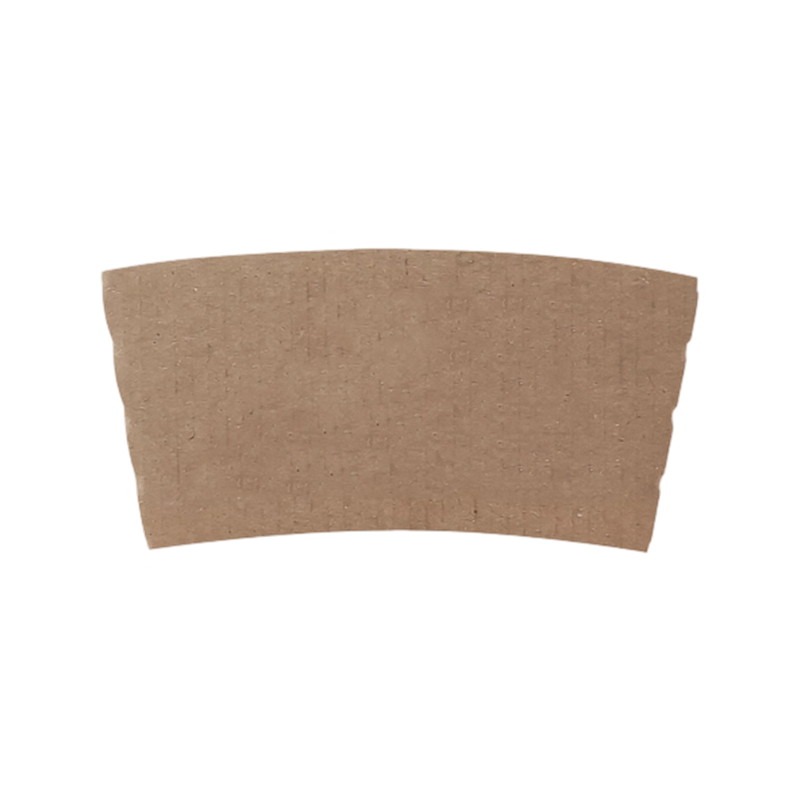
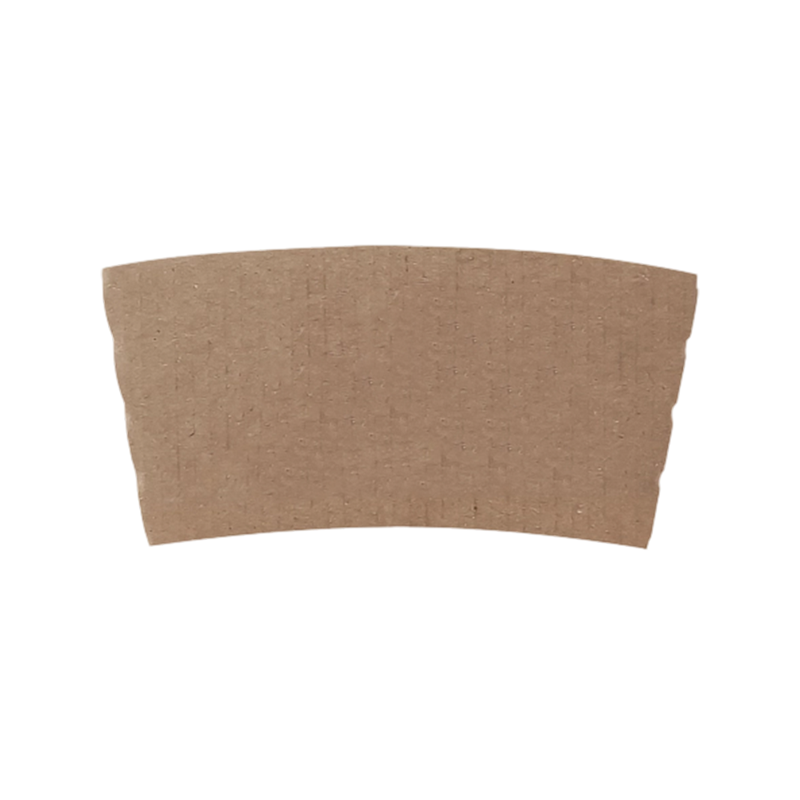
Kraft cup sleeves are protective paper wraps used on hot beverage cups to make them easier and safer to hold. They are widely seen in coffee shops, bubble tea stores, restaurants, office pantries, convenience stores, hotels, and takeaway beverage services. Product options include kraft sleeves for 8 oz, 12 oz, 16 oz, and 20 oz cups, along with custom printed versions for branded packaging projects.
Produced from food-contact-grade corrugated kraft paper, these sleeves help reduce heat exposure while providing a comfortable grip. The corrugated structure creates an insulating air layer that improves heat resistance and handling performance. Natural kraft paper also offers recyclable and biodegradable material properties.
Customization services cover sleeve dimensions, die-cut shapes, logo printing, promotional text, colors, and graphic artwork. Suitable for restaurant chains, coffee brands, packaging distributors, FMCG companies, cultural and creative businesses, and event organizers.
OEM / Bulk Supply for Coffee Chains & Food Brands





A box used to be a pretty simple thing. Put the product inside, tape it up, and ship it out. Th...
Takeaway coffee is part of everyday life for a lot of people. They grab a cup before work, betwe...
A takeaway coffee may only need a cup, lid, and drink, but there is another small part of the packag...
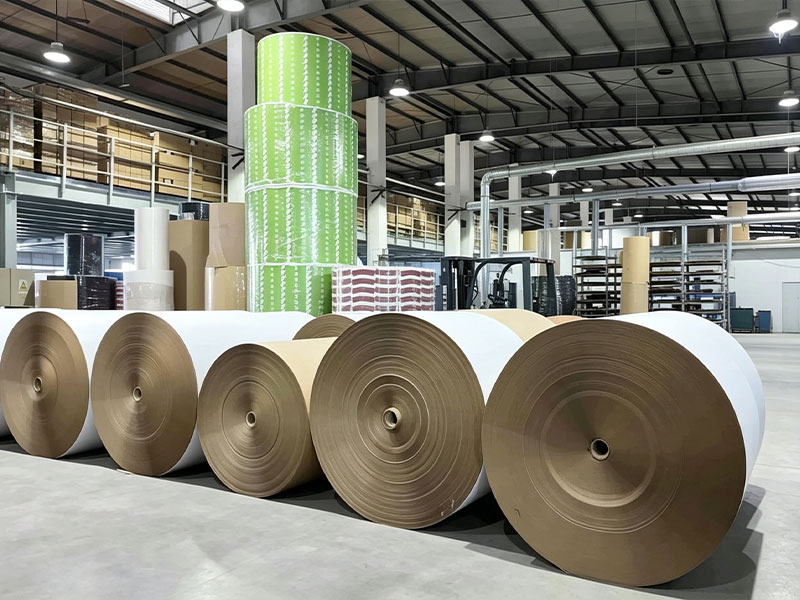
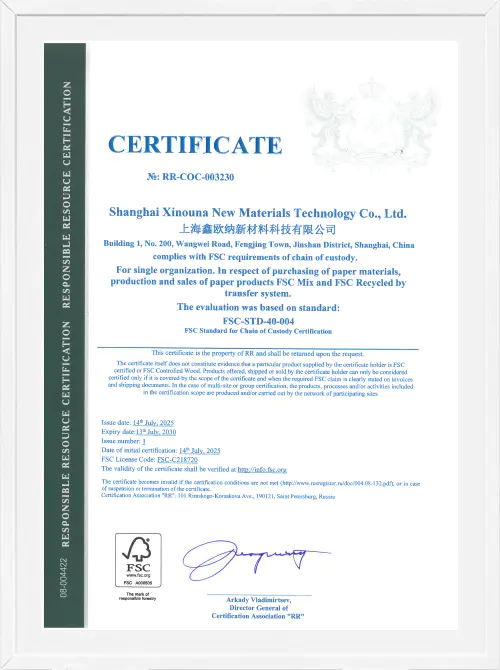
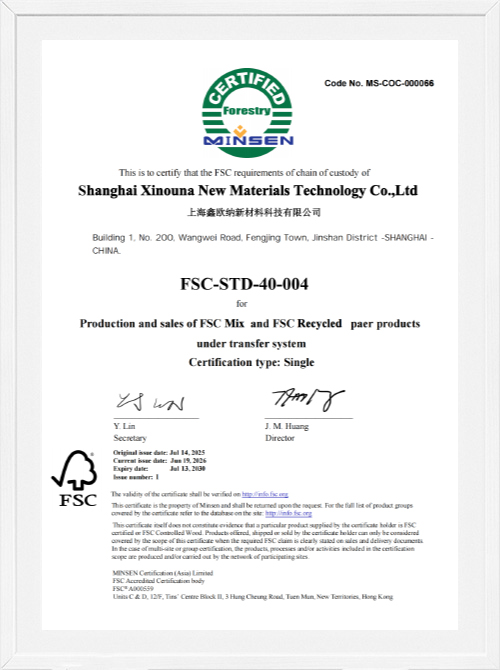
Shanghai Xinona New Material Technology Co., Ltd. was established on February 14, 2022. The company ...
Shanghai Xinona New Material Technology Co., Ltd. was established on February 14, 2022. The company ...
Shanghai Xinona New Material Technology Co., Ltd. was established on February 14, 2022. The company ...
A hot drink should be comfortable to carry, not a test of how quickly someone can switch hands. Kraft cup sleeves provide a simple solution by adding a protective paper layer around the cup, helping users handle freshly prepared coffee, tea and other warm beverages more comfortably.
Beyond heat protection, a sleeve also affects grip, cup presentation and brand visibility. Natural brown kraft paper has a familiar, understated appearance that works particularly well for cafés, bakeries, tea shops and foodservice brands seeking a warm or minimally processed packaging style.
However, not every sleeve performs in the same way. Paper strength, corrugated profile, sleeve dimensions, seam construction and print coverage all influence the finished product. This guide explains the main points buyers should consider when sourcing standard or custom kraft paper cup sleeves.
Kraft cup sleeves are shaped paper wraps fitted around the outside of hot beverage cups. They create an additional layer between the heated cup wall and the user’s hand while providing a textured area that is easier to hold.
They are commonly paired with disposable cups used for:
Depending on the design, a sleeve may be supplied flat, pre-glued or assembled and ready for use. It may have a smooth, embossed, fluted or corrugated construction.
The main functions of kraft coffee cup sleeves include:
Fit is central to all these functions. A sleeve that is too loose may rotate or slide downward. One that is too tight can be difficult to apply and may sit higher than intended. The sleeve profile should therefore be developed around the actual cup rather than its stated capacity alone.
Kraft paper is widely used for beverage sleeves because it offers a useful combination of strength, foldability and natural appearance. Its visible fibers and brown tone give the finished packaging a less polished, more tactile character than coated white paper.
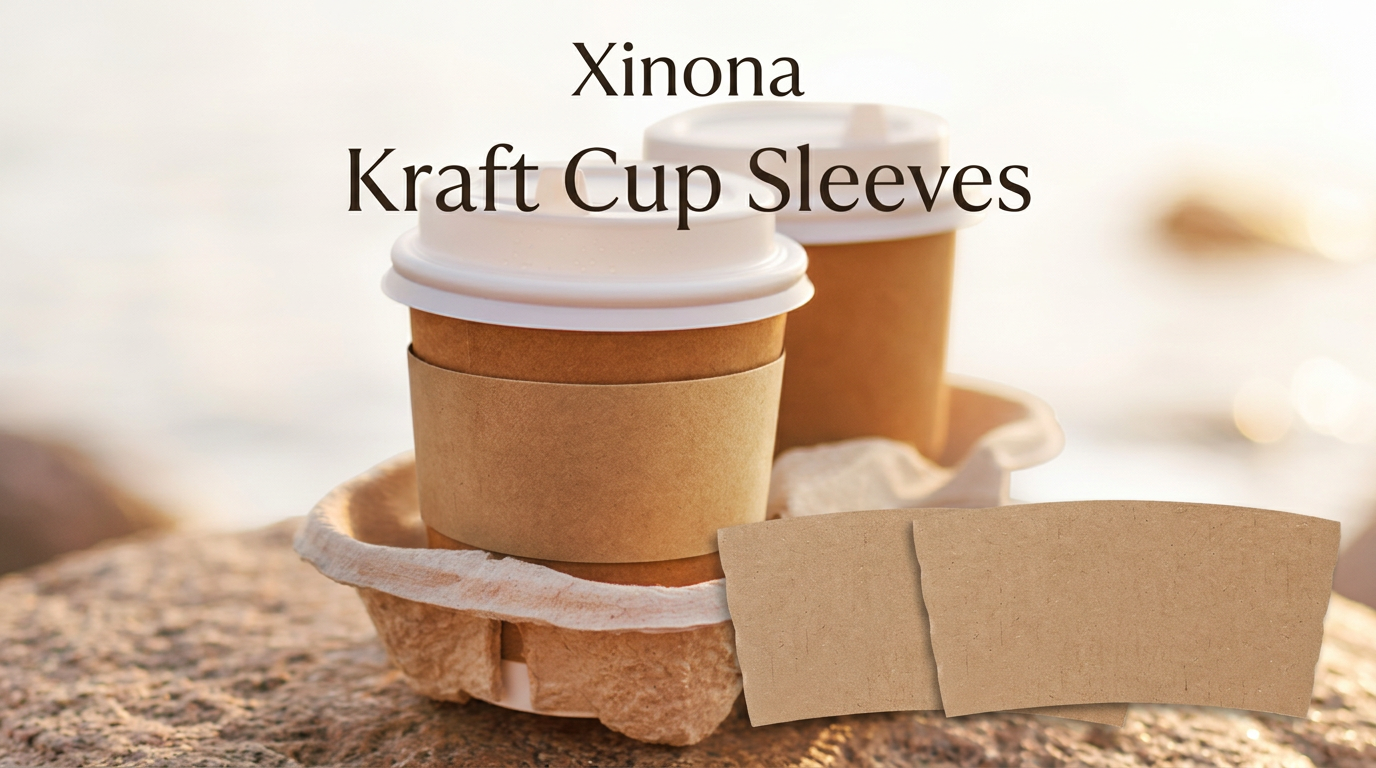
This appearance is often associated with coffee culture, artisan food products and pared-back packaging. Still, the choice should not be based on visual style alone. The selected kraft grade must also withstand printing, die-cutting, corrugating, folding, gluing and everyday handling.
Several properties make kraft paper suitable for cup sleeve production.
The word kraft covers a broad range of papers. Different grades may vary in shade, recycled content, surface smoothness, fiber composition, basis weight and moisture resistance. Two sleeves described as kraft can therefore look and behave quite differently.
For foodservice projects, the material specification should also be reviewed against applicable regulations in the destination market. Although the sleeve normally sits outside the cup, buyers may still require documentation relating to paper composition, inks, adhesives or food-packaging use.
Many kraft sleeves use corrugated or fluted paper rather than a completely flat sheet. The raised structure creates small gaps within or beneath the sleeve, reducing the amount of direct contact between the hand and the hot cup surface.
Air trapped in these spaces does not transfer heat as quickly as a dense, compressed material. This is why the geometry of the corrugation matters. A well-formed profile can provide useful separation without making the sleeve unnecessarily heavy.
Corrugation also changes how the sleeve feels. Raised lines create additional friction and contact points, helping the user maintain a steadier grip during takeaway service.
The practical result depends on more than total paper thickness. Relevant variables include:
If the flute is crushed during production, its air spaces may become smaller. A sleeve can therefore appear thick on a specification sheet yet provide less structural separation than expected.
The following factors should be considered together when comparing corrugated kraft sleeves.
| Structure Factor | Influence on the Finished Sleeve |
|---|---|
| Corrugation height | Affects structural depth, heat separation and tactile prominence |
| Ripple spacing | Changes the visual texture, bending behavior and contact pattern |
| Paper thickness | Contributes to stiffness, durability and forming response |
| Texture direction | Influences wrapping, grip, artwork alignment and surface appearance |
| Die-cut precision | Controls the outline, overlap area and consistency of cup fit |
| Creasing design | Helps the sleeve fold and form without excessive spring-back |
| Corrugation compression | May reduce air space, thickness and visual uniformity |
| Seam construction | Affects joint strength, flatness and holding comfort |
A thicker board is not automatically a better board. For cup sleeve applications, the objective is to balance insulation, flexibility, stiffness and processing stability.
Kraft paper sleeves are often described according to familiar cup capacities, including 8 oz, 12 oz, 16 oz and 20 oz. These labels are useful for initial communication, but they do not provide enough information to finalize a sleeve design.
Cups with the same nominal capacity may come from different moulds. Their upper diameter, lower diameter, height and taper can vary, even when both products are sold as 12 oz or 16 oz cups.
The table below provides a general application reference rather than fixed sleeve dimensions.
| Cup Sleeve Size | Common Applications | Key Selection Point |
|---|---|---|
| 8 oz | Small coffee, espresso-based drinks and hot tea | Compact coverage with an accurate curved profile |
| 12 oz | Regular coffee, tea and hot chocolate | Balanced fit, insulation and usable print area |
| 16 oz | Large coffee and specialty beverages | Wider coverage with stable grip and seam strength |
| 20 oz | Extra-large takeaway drinks | Stronger shape retention and secure positioning |
Smaller sleeves leave less room for dimensional error. A slight difference in curvature or opening width may be more noticeable on an 8 oz cup because the available area is limited.
Larger sleeves require careful control of stiffness. The material must cover a broader part of the cup without becoming unstable, but it must still follow the cup taper naturally.
For custom sizing, the manufacturer will normally require:
Testing should be completed on the actual cup. A digital drawing is useful, but a physical fitting sample reveals sliding, seam tension and hand comfort more reliably.
Kraft cup sleeves suit a wide range of hot drink services because they are lightweight, easy to store and simple for staff to apply. They can be used as a standard packaging component or customized for a particular campaign, location or beverage range.
Kraft coffee cup sleeves are frequently used with:
The intended beverage can influence the sleeve specification. A drink served at a relatively high temperature may require different testing from one served cooler. Cup construction also matters because a thin single-wall cup transfers heat differently from a heavier or double-wall format.
Typical use settings include:
In busy service environments, the sleeve must be easy to open and place on the cup. Flat-packed pieces should separate cleanly, while pre-glued sleeves should open without seam failure or excessive resistance.
For events and seasonal promotions, the sleeve also becomes a short-term communication tool. It can carry event dates, campaign messages, QR codes or limited-edition artwork without requiring a completely new printed cup.
Custom kraft cup sleeves can be adjusted in both appearance and construction. The development process may involve choosing a paper shade, changing the sleeve height, refining the die-cut profile or selecting a corrugation direction that works with the artwork.
Available customization may include:
Structural and visual decisions should be made together. A deep corrugation may create a strong tactile effect but can also influence the reproduction of fine lines. A compact profile may provide a quieter appearance and a more controlled surface for smaller graphics.
Printing on kraft paper is different from printing on a bright white substrate. The natural brown tone remains visible beneath many inks and can change the perceived color of the artwork.
Important design considerations include:
Simple artwork often works particularly well. Bold typography, line illustrations and limited color palettes allow the paper itself to remain part of the design.
More detailed graphics are still possible, but the chosen printing process and corrugated profile should be tested first. When brand colors must meet a narrow tolerance, approval should be based on a printed production sample rather than a digital proof alone.
Kraft and white sleeves can share the same basic function, but they create noticeably different packaging impressions. The best choice depends on the artwork, brand positioning and desired relationship between the paper and printed design.
| Sleeve Type | Visual Style | Suitable Applications |
|---|---|---|
| Kraft cup sleeves | Natural, warm and tactile | Coffee, tea, bakeries and understated brand designs |
| White cup sleeves | Bright, clean and contemporary | Multicolor artwork, pale graphics and detailed branding |
| Color printed sleeves | Promotional and visually prominent | Events, seasonal beverages and campaign packaging |
| Corrugated cup sleeves | Textured and function-led | Hot takeaway drinks requiring improved grip and separation |
Kraft paper becomes a visible part of the design. Its fibers, shade variation and brown tone contribute to the finished appearance rather than acting as a completely neutral base.
White paper provides stronger contrast for pale colors and detailed artwork. Kraft, by comparison, often suits designs that use fewer colors and deliberately allow the material to remain visible.
Neither option is universally better. A physical print test can help determine which surface supports the artwork and user experience more effectively.
Paper-based sleeves can support packaging strategies that aim to reduce unnecessary plastic components or place protective material only where it is needed. Kraft paper also communicates a natural visual style, although appearance alone should never be treated as proof of environmental performance.
The environmental profile of a cup sleeve depends on its entire lifecycle and material composition. Relevant considerations include fiber source, recycled content, manufacturing efficiency, print coverage, coatings, adhesives, transport and local waste-processing infrastructure.
Depending on their design, kraft sleeves may offer several practical advantages:
Environmental wording should remain precise. A paper sleeve is not automatically recyclable in every location, and the word kraft does not guarantee recycled or responsibly sourced content.
Recyclability can be affected by:
Claims such as “recyclable,” “compostable” or “made from recycled material” should be supported by the actual specification and, where required, appropriate testing or certification.
Producing a consistent sleeve involves more than cutting a piece of paper into a curved shape. Paper condition, flute formation, print registration, cutting accuracy and seam bonding all contribute to the finished result.
The material is selected according to strength, basis weight, shade, surface quality, stiffness and processing requirements. The paper combination should suit the intended corrugated profile and cup format.
The paper is formed into the specified straight, diagonal, fine-ripple or other textured structure. Ripple height and spacing need to remain consistent to avoid visible or dimensional variation.
Logos, text and graphics are printed using a method appropriate for the paper surface and order requirements. Print position must account for the final die-cut outline, seam and cup orientation.
The printed or unprinted material is cut to the required sleeve profile. Cutting accuracy controls the outer edges, curvature, overlap and final fit.
Where the design requires it, crease lines help the sleeve bend predictably. Creasing pressure must be controlled so the paper fibers and corrugated structure are not damaged.
Pre-glued sleeves are joined at the designed overlap area. Adhesive type, application quantity, pressure and curing conditions influence seam strength.
Production samples may be reviewed for dimensions, paper shade, ripple consistency, print registration, edge quality, seam security and fit on the specified cup.
Finished sleeves are counted, stacked and packed to protect them from crushing, moisture and contamination during storage or shipment.
Paper is sensitive to changes in humidity. Stable storage and production conditions help reduce curling, warping, brittleness and dimensional movement. Finished sleeves should remain protected from moisture and excessive compression, especially when the flute structure is part of their insulation performance.
Kraft cup sleeves reduce direct contact with hot cup walls, improve grip and provide space for logos or product information. They are commonly used for takeaway coffee, tea and other hot beverages.
Many kraft sleeves may be recyclable as paper, depending on their coatings, inks, adhesives and local recycling facilities. Recyclability should be confirmed according to the complete material structure.
The corrugated structure creates small air spaces between the cup and the hand, helping slow heat transfer. Its raised texture also provides a more secure grip.
Check the cup’s top diameter, bottom diameter, height and taper rather than relying only on its stated capacity. The sleeve should fit securely without sliding or stressing the seam.
Yes. Kraft sleeves can be printed with logos, text, QR codes and graphics. Dark, high-contrast designs usually appear clearer, while pale colors and fine details should be tested before production.
Kraft sleeves have a natural brown appearance suited to warm or minimalist branding. White sleeves provide a brighter base for pale colors and detailed multicolor artwork.
Yes, they can add grip and branding to cold cups. However, condensation may weaken untreated paper, so moisture resistance should be tested for the intended application.
Kraft cup sleeves bring together practical handling, material efficiency and a naturally understated appearance. Their corrugated structure can create useful separation from a hot cup while improving grip, and the visible paper surface gives brands an additional area for communication.
When selecting or developing kraft paper cup sleeves, buyers should review:
Xinona develops custom kraft cup sleeves around the actual cup profile, required paper structure and artwork. Options may include different kraft shades, corrugated textures, sleeve dimensions, logo printing and die-cut formats for coffee, tea and takeaway beverage packaging.
Providing a physical cup, dimensional drawing, artwork file, order quantity and delivery requirements at the quotation stage helps shorten sampling time and reduce fit-related revisions. A well-matched sleeve should look natural on the cup, remain secure during handling and perform consistently from one production batch to the next.
Are You Ready To Customize Your Product?
Custom products available. We look forward to your cooperation.
Quick Link
Contact Information
Tel: 86-188 5739 3958
Tel: 86-136 5198 9100
E-mail: info@xinonapaper.com
Address: 200 Wangwei Road, Fengjing Town, Jinshan District, Shanghai

 English
 Español
 عربى
عربى