86-188 5739 3958

Color Corrugated Paper Packaging Trends: What Are Brands Looking for in Custom Box Design?

A box used to be a pretty simple thing. Put the product inside, tape it up, and ship it out. That's still part of the job, of course, but brands now expect more from their packaging.

The box needs to protect the product, keep shipping practical, look like the brand, and sometimes even add something to the customer's buying experience. This is especially noticeable with Color Corrugated Paper packaging, where printed graphics can turn an ordinary shipping box into part of the brand presentation.

But there is a catch. What looks good in a design file doesn't always work well on a production line.

A custom box may need special materials, complicated printing, extra inserts, or unusual structures. Those details can push up costs or make packing slower. So when B2B buyers look at packaging trends, they need to think beyond appearance.

Right now, brands are looking for a more balanced approach: recognizable branding, useful box structures, practical printing, sensible material use, and packaging that can actually be produced in volume.

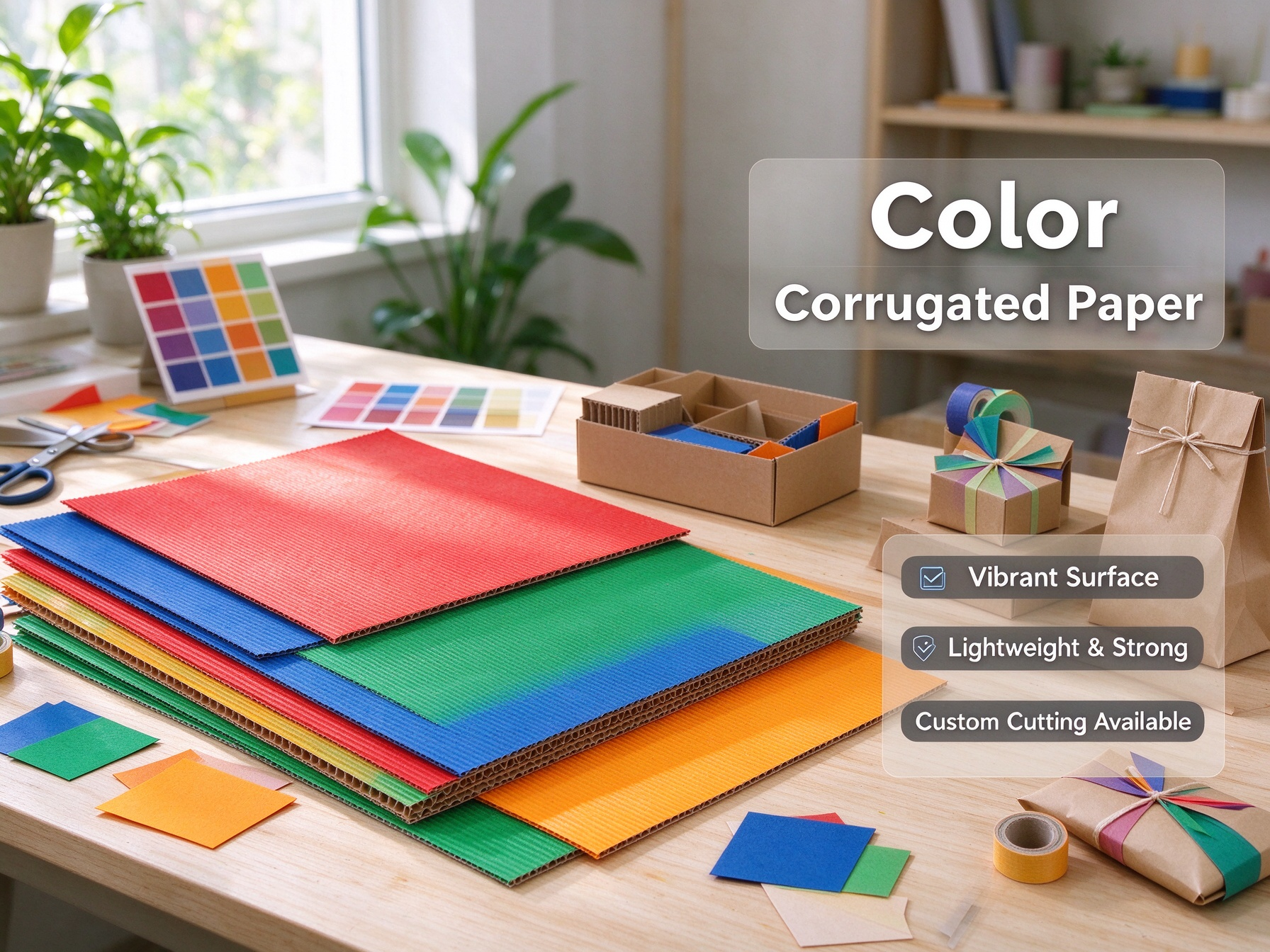
Lightweight and strong color corrugated paper with custom cutting available.

Why Color Corrugated Paper Is Getting More Attention in Custom Packaging

Brown corrugated cartons are still widely used, especially for basic shipping. But brands have more options now.

With printed corrugated paper, companies can add logos, colors, illustrations, product information, patterns, and other graphics to the box. That means the same package can protect a product during transportation and help present the brand once it reaches the customer.

The material itself is also practical. Corrugated board uses liner paper and a fluted middle layer to create a lightweight structure with useful strength.

That combination works well for e-commerce, retail products, subscription boxes, and direct-to-consumer shipments.

The package may travel through several hands before reaching the customer. It needs to survive that trip and still look presentable when it gets there.

Brands Are Looking for Packaging That Reflects Their Identity

Brand consistency has become a bigger part of custom packaging design.

A company may already have specific colors, fonts, logos, and graphic elements on its website and product labels. Naturally, it wants the packaging to look like it belongs to the same brand.

That doesn't mean printing the entire box with graphics.

Sometimes a logo in the right place, two familiar colors, or a simple pattern is enough to make the carton recognizable. This can also make the design easier to reproduce across several box sizes.

There is a practical issue here, though. If a company orders five different carton sizes, can the same visual style be kept across all of them?

That's something buyers should discuss with the packaging manufacturer before finalizing the artwork. Small changes in panel size, folding areas, and printing surfaces can affect the final design.

Custom Box Design Is Moving Toward Cleaner Graphics

A lot of packaging has also become less crowded.

Putting a logo, product information, patterns, several colors, and promotional messages on every available surface can make the box difficult to read. Sometimes a simpler design gets the point across faster.

This matters even more for online brands. Customers may see the package in product photos, unboxing videos, social media posts, or customer reviews.

A clean box tends to photograph well and makes the main branding easier to notice.

Still, simple doesn't mean boring. A toy company, cosmetics brand, food supplier, electronics company, and industrial manufacturer will not have the same design needs.

The important thing is that the graphics make sense for the product and the people buying it.

Digital Printing Gives Smaller Brands More Flexibility

Large-volume packaging orders have traditionally favored conventional printing because the cost can work well at scale. Digital printing gives brands another option, especially when they don't need huge quantities of one design.

It can also make artwork changes easier.

For example, a company may need different packaging for:

  • Seasonal packaging
  • Limited-edition products
  • Regional campaigns
  • Multiple product variants
  • Personalized packaging
  • New product launches

Digital printing can be useful in these situations because different artwork versions can be produced without setting up a separate traditional printing plate for each one.

But that doesn't automatically make digital printing the right choice.

Order volume, artwork details, print quality, production speed, and unit cost all need to be considered. A packaging supplier can usually compare the options based on the actual order instead of simply recommending one printing method.

Color Accuracy Matters More When Packaging Becomes Part of Branding

If a brand has a specific blue, green, red, or other signature color, getting that color reasonably consistent across packaging can matter.

A box that looks noticeably different from the company's website or product label can make the overall branding feel a little off.

Several things can affect the final printed color:

  • Printing process
  • Ink system
  • Corrugated board surface
  • Material color
  • Ink coverage
  • Drying conditions
  • Printing equipment
  • File preparation

The paper itself matters too. Printing on brown kraft liner and printing on a white liner will not produce exactly the same visual result.

If color accuracy is important, buyers should talk about the paper and printing process before production. For larger orders, getting a physical sample approved can save a lot of trouble later.

Brands Want Packaging That Protects Products During Shipping

A good-looking carton is not much use if the product arrives damaged.

Modern shipping networks can be rough on packaging. Boxes may be stacked, dropped, squeezed, moved around in trucks, or handled several times before delivery.

That's why structural performance still comes before decoration.

A custom carton may need to take these things into account:

  • Product weight
  • Product dimensions
  • Internal void space
  • Stacking requirements
  • Shipping distance
  • Distribution environment
  • Closure method

The exact requirements depend on the product. A box for a soft textile item has a very different job from one carrying glass bottles or electronic components.

Box Structure Should Match the Product

There isn't one box style that works for every application.

A lightweight product might fit comfortably in a simple carton. A fragile item may need stronger board and an internal insert. Products with several components may need compartments to stop everything from moving around during shipping.

Common options include regular slotted cartons, mailer boxes, die-cut boxes, folding designs, and cartons with custom inserts.

The choice comes down to the product and how it will be handled.

Packaging requirement Design factor to review
Lightweight product Board grade and box size
Heavy product Compression strength and structure
Fragile product Inserts and internal protection
E-commerce shipping Closure and impact resistance
Retail display Graphics and shelf presentation
Multiple product sizes Modular or adjustable structure
Long-distance shipping Board strength and stacking performance

A packaging manufacturer can help match the board and structure to the application. The goal isn't simply to make the box heavier. Extra material costs money, takes up space, and may not solve the actual problem.

Reducing Empty Space Can Improve Shipping Efficiency

Empty space inside a box is easy to overlook during design.

A carton that is much larger than the product may need extra filling material. It also takes up more warehouse space and can increase shipping costs when dimensional weight is used.

Custom sizing can help.

The box should be large enough to fit the product and whatever protection it needs, but there is no reason to leave a huge amount of unused space around it.

That said, making the carton too tight creates its own problems. Workers may have difficulty packing the product, and there may not be enough room for protective material.

So it's really about finding a workable size, not simply making the box smaller.

Sustainable Packaging Expectations Are Becoming More Specific

Brands are paying closer attention to packaging waste, but sustainability has become a little more complicated than simply saying “use less material.”

Buyers may need to look at paper fiber, recycled content, coatings, inks, adhesives, package size, and how the finished box can be handled after use.

Corrugated paper is commonly recycled in many markets, but the complete construction still matters. Certain coatings or laminated materials, for example, may affect how a package is handled by local recycling systems.

Before ordering, buyers can ask:

  • What paper grades are used?
  • Is recycled fiber available?
  • What coatings are applied?
  • Are the printing inks suitable for the intended recycling system?
  • Can material use be reduced without affecting box performance?

These are more useful questions than simply asking whether a package is “green.”

Kraft and White Corrugated Boards Serve Different Design Needs

The liner used on a corrugated box affects how the finished package looks.

Kraft-colored board has a natural appearance. It works nicely for brands that want a simple, earthy, or less polished visual style.

White liner provides a lighter printing surface. Graphics and certain colors can appear cleaner against it, which can be useful when the package relies heavily on printed artwork.

Neither option is automatically right for every project.

The decision should consider the desired appearance, printing requirements, product application, and budget. Some manufacturers can offer different substrate options so buyers don't have to use the same material for every packaging project.

Interior Printing Is Becoming Another Branding Opportunity

Why leave the inside of the box blank?

Some brands now use the inner surface for instructions, illustrations, short messages, product information, or simple graphics.

It can make opening the package feel more intentional. For subscription products and consumer goods, that small detail can be useful.

But there is a cost attached to it.

Extra printing means additional production work and ink usage. For a high-volume order, buyers should think about whether the inside graphics actually add enough value to justify the expense.

Sometimes they will. Sometimes a simple printed message on the outside is enough.

Custom Inserts Can Improve Both Presentation and Protection

The outer carton is only one part of the packaging.

An insert can hold a product in place, separate several items, or keep small components organized. Depending on the application, it might be made from corrugated board, paperboard, molded fiber, foam, or another material.

For brands trying to reduce plastic, paper-based inserts may be worth considering when they can provide enough protection.

The important part is to design the insert and outer carton as one system.

There's little point in having a strong box if the product is still bouncing around inside it.

Unboxing Design Is Influencing Custom Box Features

The way a customer opens a package has become part of packaging design, especially for consumer brands.

Mailer boxes, pull tabs, printed interiors, compartments, custom tissue paper, and other opening features are becoming more common.

But there is a big difference between a prototype and a production run of 20,000 boxes.

A complicated box may take longer to assemble. Special cutting or tooling can also add cost. If packing workers need several extra steps for every unit, that can become a real operational issue.

So the question should be simple: Does this feature add enough value to justify what it costs to produce and pack?

That is something worth testing before committing to a large order.

Packaging Personalization Is Growing Across Product Variants

Brands with several product versions often want packaging that can change without losing the overall brand look.

One product might use a blue main color, while another uses green. The logo and basic layout stay the same, making the products feel like part of one range.

Digital printing can be useful when artwork changes often or quantities are relatively small.

For large quantities of the same design, conventional printing may still make more financial sense.

The right choice depends on how often the artwork changes and how many boxes the company actually needs.

What B2B Buyers Should Check Before Ordering Color Corrugated Paper Boxes

Before placing a bulk order, buyers should give the manufacturer enough information to understand the job.

At minimum, provide:

  • Product dimensions and weight
  • Desired box style
  • Required board grade
  • Printing colors
  • Artwork files
  • Expected annual quantity
  • Shipping conditions
  • Internal protection requirements
  • Folding and packing method
  • Storage conditions

A physical sample is also worth checking before mass production.

You can see whether the product fits properly, whether the box folds as expected, how the printing actually looks, and whether the closure is easy to use.

For larger projects, shipping or compression testing can be useful too. Problems that aren't visible in a design file sometimes show up very quickly once the box is handled.

How Manufacturers Can Support Custom Packaging Development

A packaging manufacturer doesn't have to wait until the artwork is finished.

They can also help during the design stage by reviewing dimensions, board selection, box structure, printing requirements, and production limitations.

For example, a brand may want the same detailed graphic on five different box sizes. The manufacturer can point out where folds, cut lines, glue areas, or panel sizes could affect the artwork.

They may also spot structural issues before the order reaches the production line.

That kind of back-and-forth can save time. More importantly, it helps turn a nice-looking prototype into packaging that can actually be produced consistently.

Building a Practical Custom Box Design

The current direction of Color Corrugated Paper packaging isn't simply about making boxes more colorful. Brands want packaging that looks like their own, protects products properly, fits shipping requirements, and doesn't create unnecessary problems during production.

Cleaner graphics, custom sizing, flexible printing, paper-based inserts, and more careful material choices are all becoming part of the discussion. But basic things such as board strength, color consistency, packing speed, and cost haven't disappeared.

For B2B buyers, the useful approach is to start with the real requirements: product size, weight, shipping conditions, artwork, protection needs, and order volume. Once those details are clear, the manufacturer has a much better chance of developing a custom box that works not just as a sample, but in everyday production.