86-188 5739 3958

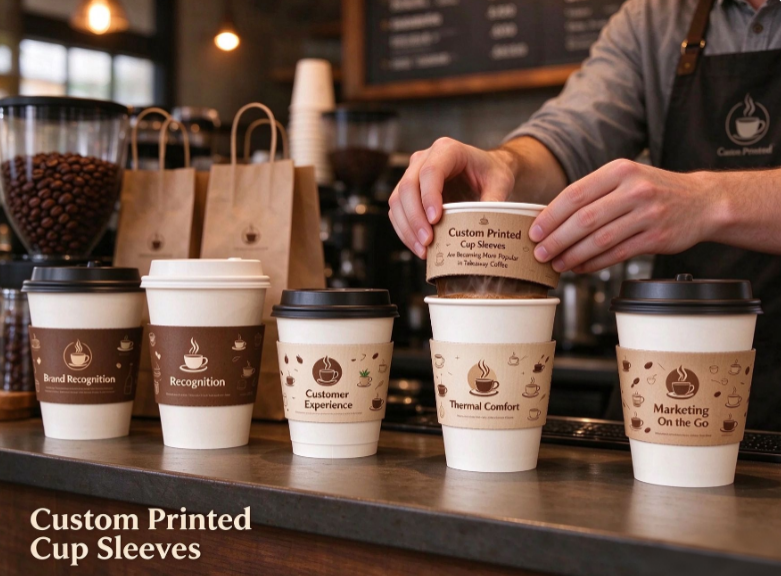
Why Custom Printed Cup Sleeves Are Becoming More Popular in Takeaway Coffee

Takeaway coffee is part of everyday life for a lot of people. They grab a cup before work, between meetings, while shopping, or on the way to the next place. The cup usually stays in their hand for a while, which means other people can see it too.

For cafés and coffee brands, that makes the cup more than just packaging.

A simple paper sleeve protects the customer's hand from a hot drink. Add a logo, brand color, promotion, seasonal design, or QR code, and the sleeve can also help with branding.

That is why Custom Printed Cup Sleeves are getting more attention from cafés, coffee chains, roasters, and beverage distributors. They are practical, but they also give businesses another small space to communicate with customers.

Of course, buying custom sleeves is not just about putting a logo on paper. The sleeve still needs to fit the cup, feel right in the hand, print clearly, and arrive consistently from one order to the next.

What Are Custom Printed Cup Sleeves?

A cup sleeve is the paperboard piece that goes around a coffee cup. Its basic job is pretty simple: it gives the customer's hand some protection from the heat.

With a custom-printed sleeve, businesses can add their own artwork during production.

Common options include:

  • Brand logos
  • Brand colors
  • Promotional messages
  • Seasonal artwork
  • Product information
  • QR codes
  • Social media details
  • Illustrations or patterns

A small café may only want its logo. A coffee chain could need the same design across hundreds of stores. A specialty roaster might use different artwork for different coffee products.

So, the amount of customization really depends on how the sleeve will be used.

Why Takeaway Coffee Creates More Demand for Branded Packaging

One simple reason is visibility.

Think about someone walking through a shopping mall with a coffee in their hand. The person may not be thinking about the café at all, but the logo on the cup is still visible to everyone around them.

The sleeve can carry:

  • Brand information
  • Product details
  • New menu announcements
  • Seasonal promotions
  • Sustainability messages
  • Loyalty program information
  • QR codes

The important thing is not to put too much on it. A sleeve is small. If the design is packed with text, people probably will not stop to read it.

A clear logo and one useful message can often do the job.

Customization Helps Cafés Keep Their Branding Consistent

Most coffee businesses already have a visual style. Their cups, bags, menus, signs, websites, and social media usually use the same logo, colors, and fonts.

The sleeve can simply follow that style.

Branding element Possible cup sleeve application
Logo Front or center
Brand colors Background or graphic elements
Typography Slogan or product information
Illustration Seasonal artwork
QR code Menu, loyalty, or social media
Promotion Limited-time offers

This is particularly useful for coffee chains with multiple locations.

Customers may visit different stores, but the packaging can still look familiar. It is a small detail, but consistent details help keep a brand recognizable.

Custom Printed Cup Sleeves Can Support Seasonal Marketing

Another reason businesses like printed sleeves is that the artwork can be changed.

For example, a café could have one design for its regular menu and another for:

  • Winter drinks
  • Holiday promotions
  • New products
  • Local events
  • Store anniversaries
  • Limited-edition coffee
  • Partner campaigns

There is no need to redesign the entire cup just because the business wants to run a short campaign.

For shorter campaigns, smaller production runs may make more sense. Of course, MOQ and pricing depend on the supplier and printing method.

The main thing is to avoid ordering more sleeves than the business can realistically use.

The Sleeve Needs to Match the Cup

This sounds obvious, but it is one of the things buyers sometimes overlook.

Coffee cups are not all the same. Their diameter, height, taper, and shape can vary. A sleeve that fits one cup may slide around on another.

Before production, buyers should check:

  • Sleeve length
  • Sleeve height
  • Cup diameter
  • Taper angle
  • Joint design
  • Flat sleeve size
Cup type What buyers should check
Small cup Fit around the smaller diameter
Medium cup Fit and hand protection
Large cup Coverage and stability
Tapered cup Correct shape and dimensions
Double-wall cup Whether a sleeve is actually needed

The safest approach is simple: give the supplier the actual cup specifications and test a sample before ordering in bulk.

Paperboard Thickness Affects Performance and Cost

The sleeve needs to be stiff enough to stay around the cup.

If the paperboard is too thin, it may bend or feel flimsy. If it is unnecessarily thick, material use and cost can go up.

There is no single thickness that works for every coffee cup. It depends on the cup, drink temperature, sleeve construction, and how the product is going to be used.

This is why samples are useful.

You can hold the sleeve, put it on the actual cup, and see what happens. Does it slide? Does it bend? Does it feel comfortable? A few minutes of testing can answer these questions much faster than looking at a specification sheet.

Printing Quality Matters

A cup sleeve does not have much space, so the artwork needs to be easy to see.

Small text, thin lines, detailed logos, and gradients can become difficult to reproduce depending on the material and printing process.

Buyers should look at:

  • Color consistency
  • Image clarity
  • Text readability
  • Ink adhesion
  • Printing registration
  • Surface finish

If the brand has specific colors, ask for a physical sample.

Digital artwork on a monitor and ink printed on paperboard are two different things. A color that looks right on screen may not look exactly the same after printing.

Different Printing Methods Suit Different Orders

There are several ways to print cup sleeves. The suitable method depends on the design, material, quantity, and budget.

Printing approach Suitable consideration
Flexographic printing Often used for larger orders
Offset printing Suitable for detailed graphics
Digital printing Useful for shorter runs
Specialty finishing Used for selected decorative effects

A basic one-color logo does not necessarily need a complicated printing setup.

A detailed seasonal design may require a different process.

The supplier should be able to explain which option makes sense for the actual order instead of simply offering the same printing method for every project.

Sleeve Structure Affects Ease of Use

The sleeve should not be difficult to put around the cup. Once it is in place, it should stay there.

Different manufacturers may use different seams, folds, or locking structures.

Buyers can check:

  • Sleeve opening
  • Side seam
  • Locking tab
  • Folded construction
  • Flat shipping format

Flat-packed sleeves are common because they are easier to stack, store, and transport.

For a small café with limited storage space, this can be more important than it sounds.

Sustainability Has Become a Bigger Packaging Issue

Coffee businesses are also looking more closely at packaging materials and environmental claims.

For cup sleeves, buyers may want to know about:

  • Paper source
  • Recycled content
  • Fiber certification
  • Coatings
  • Ink systems
  • Recycling options
  • Packaging materials

Be careful with broad claims such as “eco-friendly.” That phrase does not tell a buyer much by itself.

It is more useful to ask the manufacturer what the sleeve is made from and whether relevant certifications or documentation are available.

Customization Can Go Beyond Printing

A custom sleeve does not always mean custom artwork only.

Depending on the manufacturer's capabilities, buyers may also customize:

  • Sleeve dimensions
  • Paperboard grade
  • Surface finish
  • Die-cut shape
  • Color
  • Printing
  • Packaging
  • Bundling
  • Private labeling

For example, a coffee chain may use three cup sizes but want all of its sleeves to follow the same visual design.

The manufacturer can produce different sleeve dimensions while keeping the branding consistent.

QR Codes Can Add a Digital Function

A QR code gives the sleeve another possible use.

It could send customers to:

  • Digital menus
  • Loyalty programs
  • Promotions
  • Product information
  • Social media
  • Online ordering

But the QR code needs to work in real life, not just look good in the artwork.

The code should be large enough to scan, and its position on the sleeve should be considered because the cup surface is curved.

If QR marketing is important to the campaign, test the actual printed sleeve before placing a large order.

What Should B2B Buyers Check Before Ordering?

A sample can tell you a lot.

Before placing a bulk order, check:

Item What to evaluate
Size Fits the actual cup
Material Stiffness and hand protection
Printing Color and image clarity
Structure Stays in position
Finish Look and surface feel
Storage Easy to store flat
Packaging Protected during shipping
Sustainability Material and certification details
Consistency Same specifications between batches

For businesses with several stores, consistency matters even more. You do not want one batch of sleeves to look noticeably different from the next.

Choosing the Right Printing Volume

There is no point in ordering 100,000 sleeves if the business only uses a few thousand each month.

Before deciding on quantity, buyers should look at:

  • Daily sleeve usage
  • Number of stores
  • Campaign duration
  • Seasonal demand
  • Storage space
  • MOQ
  • Expected design changes

A design that will be used for a year may justify a larger order.

A holiday design that will only be used for a few weeks is a different story.

The quantity should fit the actual sales and marketing plan.

Storage and Shipping Can Affect the Final Cost

Sleeves are lightweight, but large quantities still take up space.

Flat-packed sleeves are generally easier to ship and store than pre-formed ones.

Buyers should ask about:

  • Carton dimensions
  • Quantity per carton
  • Moisture protection
  • Pallet configuration
  • Shipping weight
  • Storage conditions

Moisture is worth watching because paperboard can change shape or become harder to handle when stored in poor conditions.

For international orders, carton size can also affect freight costs.

Quality Control Matters for Repeat Orders

If the sleeve carries a customer's brand, consistency matters.

Manufacturers should have checks for things like:

  • Material thickness
  • Dimensions
  • Printing registration
  • Color consistency
  • Die-cut accuracy
  • Joint structure
  • Carton quantity

For larger projects, buyers can approve a production sample or specification sheet before the main order.

That gives both sides something to check against when the next batch is produced.

What Should Coffee Brands Ask a Cup Sleeve Manufacturer?

Before choosing a supplier, buyers can ask a few straightforward questions:

  • What paperboard materials and thicknesses are available?
  • Which cup sizes can you produce?
  • What printing methods do you offer?
  • Can the sleeve size and artwork be customized?
  • What are the MOQ and lead time?
  • Can you provide a physical sample?
  • How do you control printing and dimensional quality?
  • Can you provide material or sustainability documents?
  • Can packaging and labeling be customized for private-label orders?

These questions are useful for cafés, coffee chains, roasters, beverage brands, wholesalers, and packaging distributors.

When Custom Sleeves Make Commercial Sense

Not every coffee business needs a complicated sleeve.

A small café may be perfectly happy with a simple logo. A coffee chain may need several sizes with the same branding. A business that runs promotions every few months may want different designs throughout the year.

The right choice depends on the business.

Business situation Potential sleeve strategy
Small independent café Simple logo and brand colors
Specialty coffee brand Detailed artwork and product information
Coffee chain Standardized multi-size designs
Seasonal campaign Short-run promotional printing
Corporate event Custom event branding
Distributor Multiple sizes and printing options

The sleeve should solve a real packaging or branding need. There is no reason to make it more complicated than necessary.

How to Prepare a Custom Printed Cup Sleeve Specification

Before asking for quotations, start with the cup.

Give the manufacturer the cup diameter, height, taper, and material. Then provide the sleeve size, paperboard requirements, artwork, printing requirements, and packaging details.

It also helps to explain:

  • How many sleeves are needed
  • How many cup sizes are involved
  • How often the artwork will change
  • Where the sleeves will be stored
  • Which market they are for
  • When they are needed

This makes the quotation process much easier. The supplier has enough information to recommend a suitable production method instead of guessing.

Why Custom Printed Cup Sleeves Are Becoming a Practical Packaging Tool

Custom Printed Cup Sleeves are becoming more popular because they do two useful things at once. They make a hot coffee cup easier to hold, and they give the business another place to show its brand.

For cafés, coffee chains, roasters, and beverage suppliers, customization can cover the size, material, artwork, printing, finish, packaging, and more. That makes the sleeve useful for everyday branding as well as seasonal promotions.

But the artwork is only one part of the decision. Cup fit, paperboard thickness, printing quality, sleeve construction, material information, order quantity, storage, and production consistency all need to be checked.

In the end, it is a small piece of packaging. But when the sleeve fits properly, looks clear, and works with the rest of the packaging, it can do its job without making things unnecessarily complicated.