
Takeaway coffee. It's everywhere. And every café and packaging supplier is trying to figure out how to waste less on the stuff that comes with it. Cup sleeves? They insulate, they help you grip the cup, they stop your fingers from getting toasted. But how green a sleeve actually is? That's a whole other conversation. Materials matter. Manufacturing matters. Shipping matters. And what happens to the thing after someone tosses it? That matters too.
Recycled paperboard, kraft paper, molded fiber, reusable stuff—they all bring something different to the table. Picking one means juggling cost, durability, customer comfort, and whether your local waste system can even deal with it.
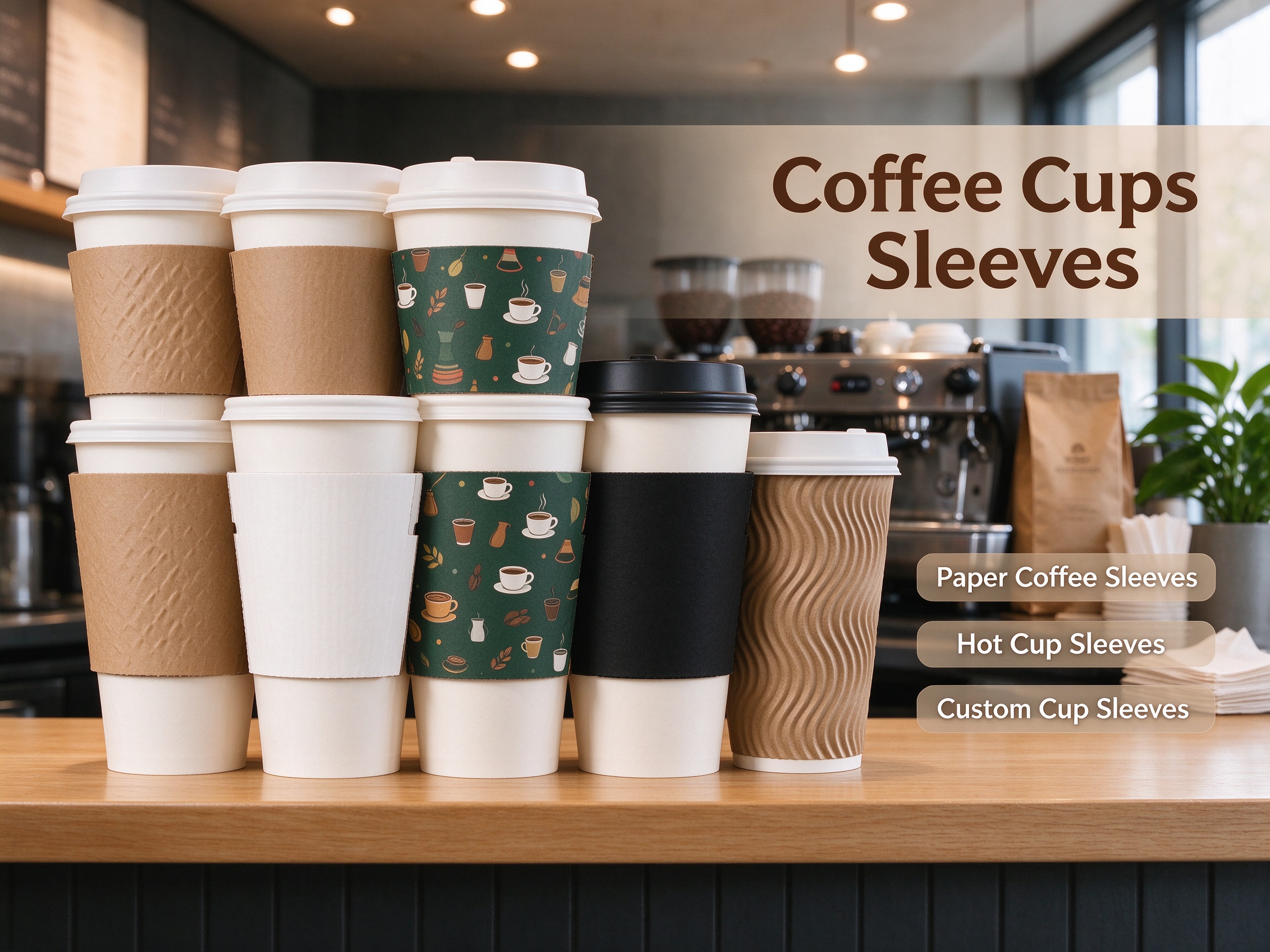
Why Material Choice Matters for Coffee Cup Sleeves
One sleeve? Barely anything. But a busy café goes through thousands a month. So even small gains in material efficiency and sourcing add up fast when you're ordering in volume.
A sleeve that's actually sustainable uses resources efficiently while still doing its job—insulating, holding up, not falling apart mid-handoff. It also has to fit with realistic disposal options. A sleeve that's technically recyclable doesn't do much good if the local facility won't take it.
Four things to look at: recycled content, responsible sourcing, manufacturing, and end-of-life. Together, they give you a better basis for comparing options.
Comparing Materials for Sustainable Coffee Cup Sleeves
| Material | Main environmental benefit | Potential limitation | Suitable application |
|---|---|---|---|
| Recycled paperboard | Reuses recovered paper fibers and may reduce demand for virgin fiber | Fiber quality and recycling acceptance vary | Everyday takeaway coffee |
| Kraft paperboard | Can provide strength and support responsible fiber sourcing | Kraft paper is not necessarily recycled | Cafés seeking a natural appearance |
| Certified virgin paperboard | Can support responsible forestry and consistent quality | Still relies on newly sourced fiber | Premium packaging requiring dependable performance |
| Molded fiber | May use recycled paper or alternative plant-based feedstocks | Processing methods and local composting access affect its benefits | Businesses exploring alternative fiber packaging |
| Reusable silicone or fabric | Can replace repeated single-use sleeves through regular reuse | Requires repeated use and appropriate cleaning | Frequent customers and reusable-cup programs |
No material wins on sustainability every single time. It depends on specs, production methods, how people actually use the thing, and what infrastructure exists locally.
Recycled Paperboard Reduces Demand for Virgin Materials
For lightweight, single-use sleeves, recycled paperboard is a practical pick. It uses recovered fibers and may cut demand for newly sourced wood. Designed well, it gives the stiffness and insulation needed for standard takeaway cups.
Check the recycled-content percentage. Don't just trust general environmental claims. And it helps to know the difference between post-consumer recycled fiber and pre-consumer material recovered during manufacturing.
Limits exist, though. Paper fibers lose quality each time they're recycled. Some applications need a blend of recycled and virgin fibers to get enough strength. So look at both recycled content and how the sleeve actually performs. A well-designed sleeve that uses less material while keeping reliable insulation can be a more practical improvement than picking a material based on recycled content alone.
Kraft Paperboard Offers Strength and Flexible Design
Kraft paperboard is all over takeaway packaging. Good stiffness, works with printing and branding, takes practical sleeve shapes. The natural brown look fits plenty of coffee shops too.
But brown paper isn't automatically recycled. Kraft sleeves may contain virgin fibers. Check sourcing info. Look at forest-certification schemes like FSC or PEFC where relevant. Those certifications help verify responsible sourcing, though they don't tell you the full environmental story of a finished product.
For cafés needing durable packaging with a simple, natural look, kraft paperboard can work. Cutting excessive thickness and optimizing the die-cut design also limits material use without hurting the customer experience.
Molded Fiber and Plant-Based Materials Require Careful Evaluation
Molded fiber can be made from recovered paper or selected plant fibers. Depending on the supplier, alternative feedstocks might include agricultural residues or other plant-derived materials.
These materials can offer useful opportunities for resource recovery. But plant-based doesn't automatically mean environmentally preferable. Cultivation, transportation, processing, drying, additives—all of it affects environmental performance.
Ask for details about composition and manufacturing. Verify any compostability claims against relevant testing or certification requirements.
And here's the big one: compostable packaging needs a composting system that will accept it. If local facilities won't take the product, theoretical compostability doesn't translate into a practical benefit.
Reusable Sleeves Can Reduce Single-Use Packaging
Reusable silicone or fabric sleeves are another route. Customers keep them, use them repeatedly, potentially cutting the number of disposable sleeves consumed over time.
The environmental benefits depend on durability, how often they get reused, cleaning requirements, and eventual disposal. Making a reusable product involves an initial resource investment. Customers need to use it repeatedly for that investment to be worth it.
Reusable sleeves make sense for loyalty programs, reusable-cup schemes, regular customers. For busy takeaway spots serving occasional customers, single-use paperboard sleeves may still be more practical. A sensible strategy might mix reusable options for participating customers with efficiently designed disposable packaging.
How Businesses Can Choose More Sustainable Sleeves
Before a bulk order, cafés and distributors should compare products using consistent criteria.
Check the material specification. Ask suppliers for recycled-content percentages, fiber sourcing details, product weight, coatings, inks, adhesives. Clear documentation makes it easier to evaluate competing options.
Prioritize functional performance. A sleeve should fit securely, resist tearing during normal handling, and insulate adequately. A poorly performing product can lead to extra material consumption if customers or staff need to double up.
Confirm local disposal requirements. Paper sleeves may be recyclable where appropriate collection and processing facilities exist. But acceptance varies by location. Coffee residue, attached components, local sorting rules—they all affect whether a used sleeve gets recovered.
Evaluate credible environmental evidence. Supplier documentation, relevant certifications, product-specific life-cycle assessments. When comparing assessments, check that products provide equivalent functionality and are evaluated using consistent assumptions.
Make Sustainability Part of Packaging Procurement
For many takeaway coffee businesses, recycled paperboard offers a useful balance of functionality and resource efficiency. Responsibly sourced kraft paperboard may also be appropriate. Molded fiber and reusable designs can suit businesses with specific materials strategies and suitable disposal or reuse systems.
The sensible choice depends on verified sourcing, product performance, and what happens after use. Compare material specifications, reduce unnecessary packaging, understand local waste-management options. That's how businesses can select Coffee Cups Sleeves that support sustainability goals without sacrificing customer comfort or operational reliability.
Are You Ready To Customize Your Product?
Custom products available. We look forward to your cooperation.
Quick Link
Contact Information
Tel: 86-188 5739 3958
Tel: 86-136 5198 9100
E-mail: info@xinonapaper.com
Address: 200 Wangwei Road, Fengjing Town, Jinshan District, Shanghai

 English
 Español
 عربى