
Kraft coffee sleeves are a go-to for cafés, chains, takeaway spots, and packaging distributors. Natural paper look, decent heat protection. But not all sleeves insulate the same or cost the same. Board thickness, flute structure, dimensions, manufacturing quality, order volume—all of it shifts the value. For buyers, the right pick isn't the thickest or the cheapest. It's the one that protects hands well enough, uses material efficiently, and stays consistent day after day. Know these factors and comparing suppliers gets easier.
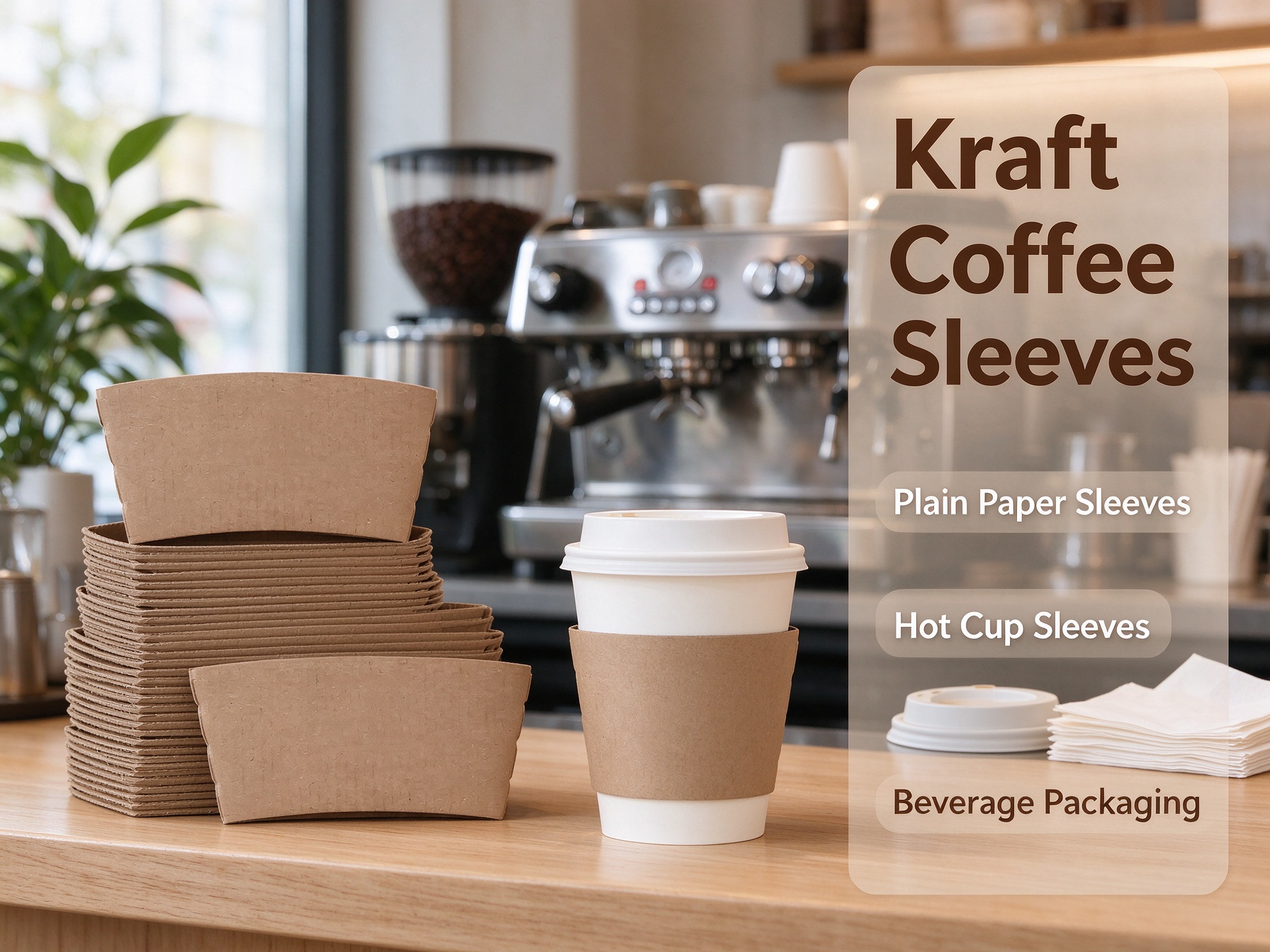
How Kraft Coffee Sleeves Provide Insulation
They cut heat transfer from cup to hand. Paperboard is a physical barrier. Air trapped in the material and between sleeve and cup helps too. Many sleeves use kraft paperboard formed into a curve. Some are single layer thicker board. Others use corrugated or embossed structures for extra air space. Performance depends on
A suitable sleeve handles normal use comfortably without wasting material.
Comparing Kraft Coffee Sleeve Materials and Designs
Different builds balance cost, insulation, manufacturing efficiency differently.
| Sleeve type | Insulation performance | Material cost | Main advantages | Potential limitations |
|---|---|---|---|---|
| Single-layer kraft paperboard | Basic to moderate, depending on thickness | Generally low | Lightweight, simple construction, easy branding | May provide limited protection for very hot drinks |
| Thick kraft paperboard | Moderate to good, depending on grade | Moderate | Greater stiffness and a substantial feel | Uses more material per sleeve |
| Corrugated kraft sleeve | Often good because of trapped air | Moderate; varies by design | Textured grip and useful insulation | Structure may increase material or converting costs |
| Embossed kraft sleeve | Moderate to good, depending on embossing depth and board | Low to moderate additional cost | Adds texture and can improve grip | Performance varies with pattern and compression |
| Recycled kraft paperboard sleeve | Depends on board thickness and construction | Often competitive, but supplier-dependent | Supports recycled-material purchasing goals | Fiber quality and consistency can vary |
General comparisons. Actual prices and insulation results depend on board specs, production methods, quantities, supplier capabilities. Ask for samples, compare under equivalent conditions.
Why Paperboard Thickness Affects Cost and Performance
Thickness is one of the more visible specs. Increasing it can improve rigidity and maybe thermal protection. But it also increases material use and shipping weight. For a high-volume café, even a small increase per sleeve adds up. Use 20,000 sleeves a month? A modest unit-price difference becomes real money over a year. But choosing the thinnest board can create other costs. Sleeves that bend easily, tear during application, or fit poorly increase waste and complaints. A low unit price doesn't always mean low total cost. Test several grades. Compare handling, heat protection, dimensional stability, unit price. Pick the lightest practical construction that meets requirements.
Is Corrugated Kraft Paper a Better Value Than Flat Paperboard?
Corrugated kraft sleeves can balance insulation and grip because their structure traps small air spaces. Those spaces reduce direct contact between hand and hot cup. Useful for businesses serving freshly brewed coffee at high temps. Also gives a distinctive tactile look for premium takeaway. Flat paperboard sleeves may offer better value when beverage temp and cup design don't need enhanced insulation. They're often straightforward to make, store, print. The right choice depends on the performance target. Compare cost with ability to keep handling comfortable. Corrugated is worth considering when extra insulation gives a meaningful benefit. A simpler flat sleeve may be enough for less demanding applications.
How Customization and Order Volume Influence Material Cost
Material is only one part of final price. Printing, cutting, forming, packaging, freight all affect delivered cost. Custom printing can strengthen brand recognition. But complicated artwork, multiple colors, special finishes, smaller runs may raise manufacturing costs. Limited budgets? Consider simpler layouts and standard dimensions. Order quantity matters too. Larger orders may reduce unit cost by spreading setup and production expenses. But buying too much increases storage needs and unused inventory risk if branding or cup specs change. When requesting quotes, give suppliers the same specs:
This helps suppliers quote comparable products and reduces the chance of sleeves that don't fit.
How to Test Insulation Before Placing a Bulk Order
A practical sample test helps verify whether a lower-cost sleeve meets needs. Use the same cup model, fill each with the same volume of hot water at a controlled starting temp. Fit each sleeve per supplier instructions. After a consistent wait, assess comfort of holding and check whether sleeve slips, deforms, or gets hard to grip. For a more objective comparison, use temperature-measurement equipment to record surface temps at consistent locations and times. Same procedure for every sample, repeated trials to account for variation. This doesn't replace formal safety or performance testing, but gives useful comparative info before a large order. Also inspect print quality, edge finishing, odor, dimensional consistency, resistance to routine handling.
Choose a Cost-Effective Option for Your Coffee Business
For many takeaway operations, standard kraft paperboard sleeves are an economical starting point. Thicker or embossed designs may balance rigidity, grip, insulation better. Corrugated sleeves are worth evaluating when extra thermal protection matters. Compare delivered unit cost with real-world performance. Request samples, verify specs, test under consistent conditions, consider waste rates alongside quoted price. Focus on functional requirements and material efficiency. That's how buyers choose kraft coffee sleeves that protect customers' hands while keeping packaging costs in check.
Are You Ready To Customize Your Product?
Custom products available. We look forward to your cooperation.
Quick Link
Contact Information
Tel: 86-188 5739 3958
Tel: 86-136 5198 9100
E-mail: info@xinonapaper.com
Address: 200 Wangwei Road, Fengjing Town, Jinshan District, Shanghai

 English
 Español
 عربى