
An insulated coffee cup sleeve keeps hands from getting scorched, adds grip, and cuts down on double-cupping. Useful little thing. For cafés, coffee chains, distributors, foodservice packaging buyers—recyclability has become a real question when choosing sleeves that balance thermal performance, cost, environmental goals.
Problem is, there's no clean yes or no. Whether a sleeve gets recycled depends on material, coatings, adhesives, and what recycling infrastructure exists where you're selling. Some sleeves move smoothly through standard paper recycling. Others need specialized processing. Plenty just aren't accepted locally. Knowing the difference lets purchasing teams see past sustainability claims and pick packaging that fits real-world disposal options—not just the marketing story.
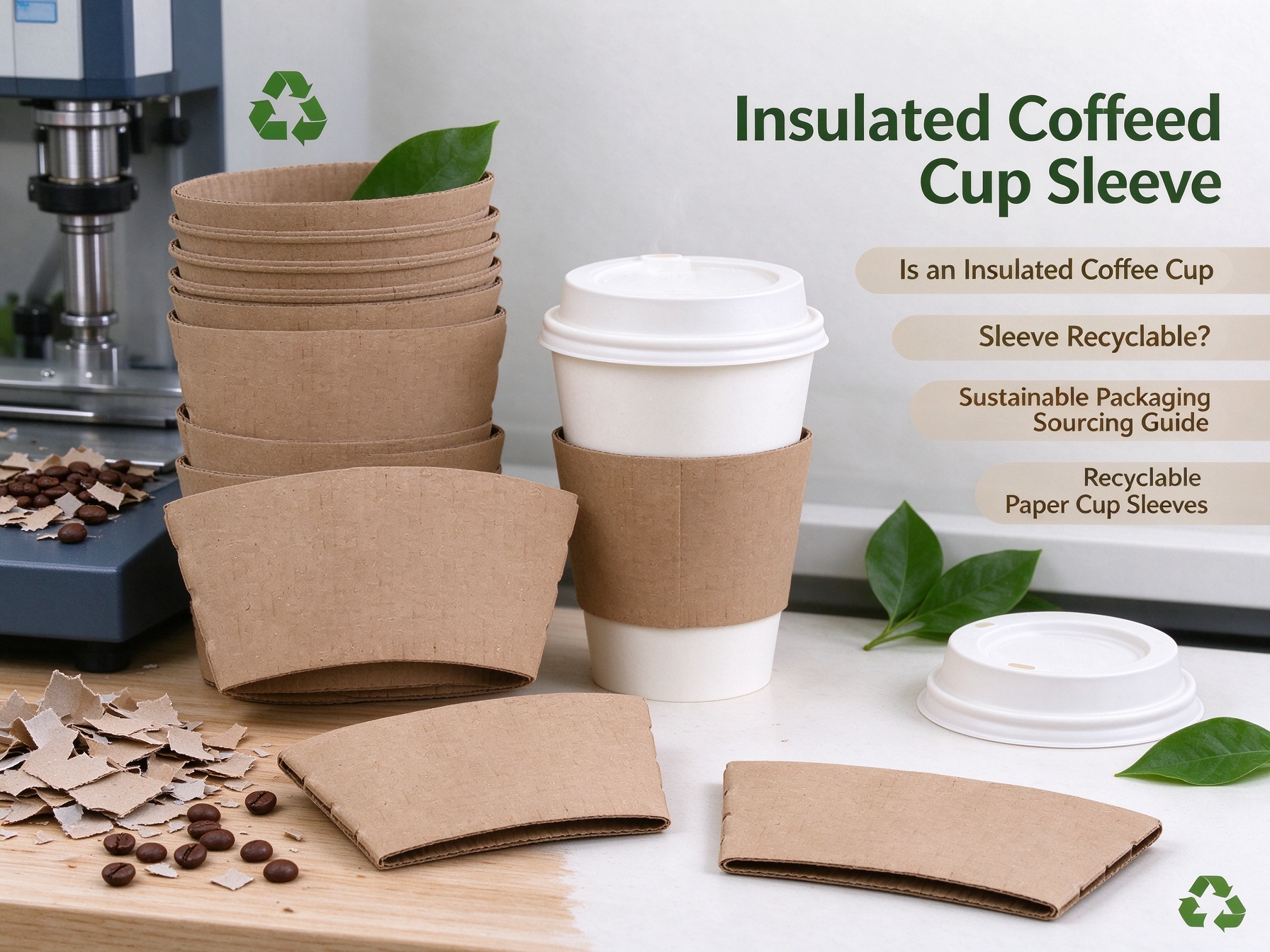
What Materials Are Used in Insulated Coffee Cup Sleeves?
Most disposable coffee sleeves are paper-based, but construction varies more than people expect. Material determines insulation, structural strength, print quality, whether recycling is even on the table.
Common options: corrugated paperboard, molded paper pulp, layered paper constructions. Corrugated sleeves trap air in their fluted structure, slowing heat transfer to the hand. Molded pulp sleeves offer a textured surface and can be made from recovered paper fibers, depending on what the supplier specifies.
Some products carry coatings, laminations, inks, adhesives for moisture resistance and appearance. Those additions complicate recycling—they may prevent fibers from separating efficiently or introduce materials local mills can't process.
Ask suppliers for a material breakdown. Words like paper-based, eco-friendly, biodegradable don't independently confirm a product is recyclable in any particular collection system. They sound reassuring. They don't prove much.
Is an Insulated Coffee Cup Sleeve Recyclable?
A sleeve made primarily from uncoated paperboard is often suitable for paper recycling—when it's clean, dry, accepted by the local program. But recyclability has to be confirmed for the specific product and destination market.
Three factors carry weight. Fiber composition: paperboard and recycled-fiber products may fit established paper recycling streams, subject to local acceptance rules. Surface treatments: plastic films, certain coatings, complex laminations can interfere with fiber recovery. Contamination: heavy food residue, oil, other contaminants may reduce a sleeve's suitability.
Coffee sleeves tend to be less contaminated than the cups they protect. Actual disposal conditions vary, though. A clean, dry sleeve may be recyclable even when the beverage cup itself isn't accepted in the same stream.
Local collection rules matter because facilities use different sorting and processing systems. Buyers selling across multiple regions should verify acceptance requirements in each market instead of relying on a general recyclability statement. What works in one city might fail in the next.
How Different Sleeve Materials Compare
| Sleeve material | Recycling considerations | Sourcing considerations |
|---|---|---|
| Uncoated corrugated paperboard | Often compatible with paper recycling programs | Good insulation and established supply options |
| Recycled paperboard | Potentially recyclable again if locally accepted | Request recycled-content documentation |
| Molded paper pulp | May be accepted with paper or fiber-based packaging | Check moisture resistance and shape consistency |
| Plastic-laminated paper | May require specialized processing or be rejected | Verify the laminate composition and local recycling access |
| Compostable fiber-based material | Compostability does not automatically mean recyclability | Confirm certification and available processing facilities |
Material names alone don't establish environmental performance. Ask suppliers for specs covering fiber content, coatings, adhesives, relevant recyclability testing.
What Sustainable Packaging Buyers Should Ask Suppliers
A reliable sourcing decision requires evidence that the sleeve performs as intended and fits the disposal systems available to customers.
How to Balance Recyclability, Cost, and Performance
For high-volume coffee businesses, a small difference in unit price adds up fast over a year. But picking the lowest-priced sleeve without evaluating material performance and disposal compatibility may create costs elsewhere—replacement orders, customer complaints, waste.
Compare suppliers using consistent criteria: unit price, shipping, minimum order quantity, lead time, recycled content, technical documentation, expected defect rates. Consider whether standard sizes can serve multiple cup formats. That simplifies inventory management more than people realize.
Packaging buyers should also assess disposal infrastructure in their target markets. A technically recyclable product provides limited practical benefit if local collection systems don't accept it. For businesses operating in several regions, different material specs or disposal instructions may be necessary.
Don't treat compostability as an automatic substitute for recyclability. Compostable products generally need appropriate processing conditions, and some facilities don't accept foodservice packaging. Choose the end-of-life pathway supported by local infrastructure and verified product characteristics. Wishful thinking doesn't recycle anything.
Build a More Reliable Sustainable Sleeve Sourcing Strategy
An insulated coffee cup sleeve can be a practical part of a sustainable packaging program when material composition, performance, and end-of-life options are evaluated together. Uncoated paper-based designs may offer a straightforward recycling route in many markets. But coatings, laminations, contamination, local collection rules can change the outcome.
Before placing a bulk order, request product specifications, verify environmental claims, test samples with your actual cups, confirm local recycling acceptance. That evidence-based approach helps buyers compare suppliers accurately and select sleeves that meet customer needs while supporting credible packaging sustainability goals. Not just goals that look good on a press release.
Are You Ready To Customize Your Product?
Custom products available. We look forward to your cooperation.
Quick Link
Contact Information
Tel: 86-188 5739 3958
Tel: 86-136 5198 9100
E-mail: info@xinonapaper.com
Address: 200 Wangwei Road, Fengjing Town, Jinshan District, Shanghai

 English
 Español
 عربى